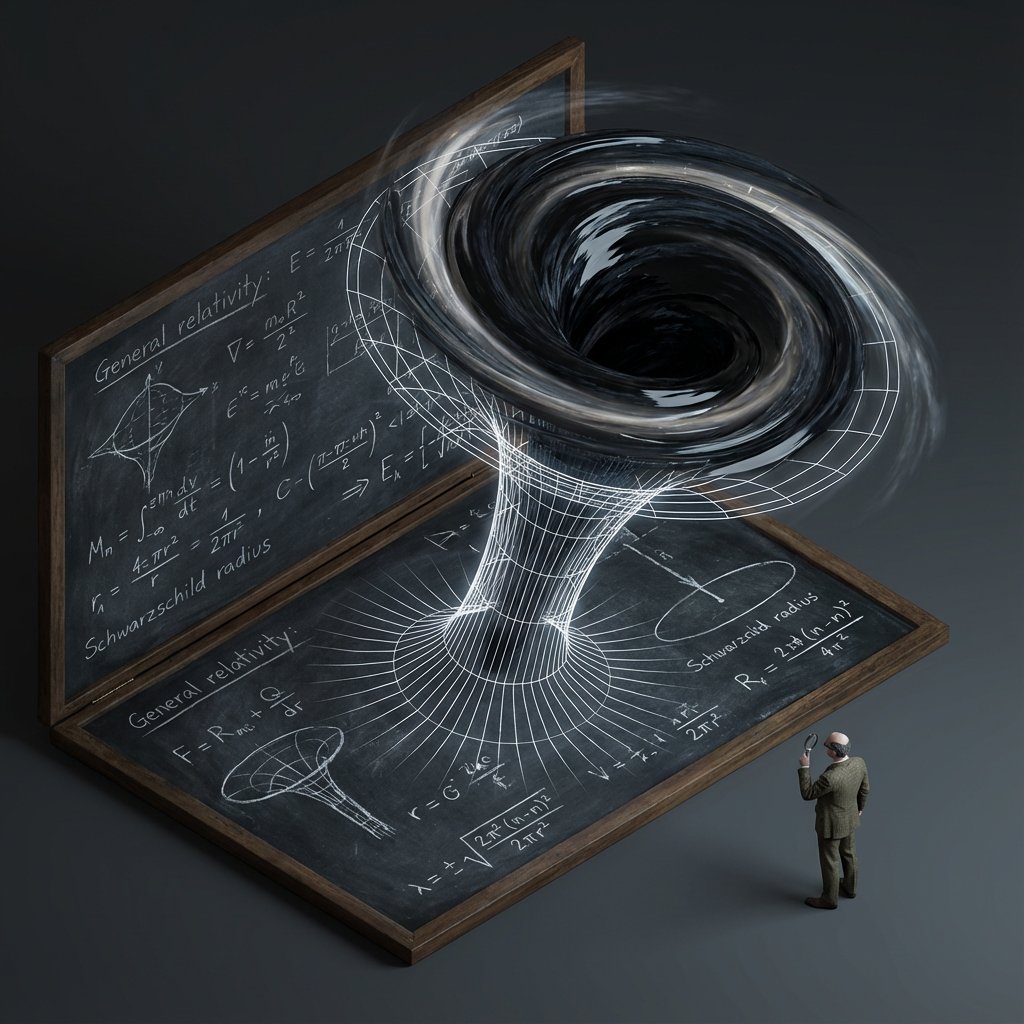
Scientific Theory Visualization Generator - Image 1

Image prompt

Scientific Theory Visualization Generator

A complex, multi-phase prompt designed to visualize abstract scientific theories or formulas (like black holes) as photorealistic, impossible architectural structures. It starts with a 2D notation medium (e.g., chalk on a blackboard) and extrudes the lines into a solid 3D structure, featuring a tiny scientist observing the creation.

Model
Nano Banana Pro Prompts
Category
Infographic / Edu Visual
Source
Internal curation
65 views 0 copies 0 try clicks

Full Prompt

Copy directly into the target model and adjust for your input assets.

Back To Library
<instructions> do this for {argument name="scientific concept" default="black holes"}
  Input Variable:   {argument name="theorem or formula" default="[Theorem / Formula]"}
Phase 1: Schematic Decomposition
Analyze the Notation: Identify the primary visual language of the scientist (Chalk on blackboard? Ink on parchment? Pencil on graph paper?).
Identify the "Structure": If this theory were a building, what would it look like?
Logic: Chaos Theory -> Fractal Spire. Thermodynamics -> Engine Block.
Phase 2: The Dimensional Transition
The Base: A flat surface covered in the [Notation Medium] (e.g., a slate blackboard covered in chalk equations).
The Extrusion: The chalk lines physically lift off the surface. They begin as white wireframes, then gain opacity, then gain texture.
The Climax: At the top of the image, the wireframes have fully solidified into a photorealistic, impossible structure representing the theory.
The Observer: A tiny, scale-model figure of the scientist stands on the flat "2D" section, looking up in awe at the massive "3D" structure they have summoned.
Output: High-Angle Isometric, "Architectural Visualization" style, stark contrast between sketchy lines and solid mass.
</instructions>

Source Record

Original source details are kept for attribution and review.

GitHub source:YouMind-OpenLab/nano-banana-pro-prompts-recommend-skill

This page is adapted from YouMind OpenLab GitHub prompt libraries. License: MIT。